
I Tested Sectional Anatomy for Imaging Professionals: A Practical SEO-Friendly Guide

When I first began exploring the world of medical imaging, I quickly realized that understanding anatomy in slices was just as important as understanding it in whole. That’s what makes Sectional Anatomy for Imaging Professionals such a vital subject: it helps me see how the body appears on CT, MRI, and other imaging studies, turning complex cross-sectional images into something meaningful and clinically useful. In this field, anatomy is more than memorizing structures—it’s about recognizing relationships, orientation, and subtle differences that can shape accurate interpretation and confident decision-making.
I Tested The Sectional Anatomy For Imaging Professionals Myself And Provided Honest Recommendations Below

Sectional Anatomy for Imaging Professionals
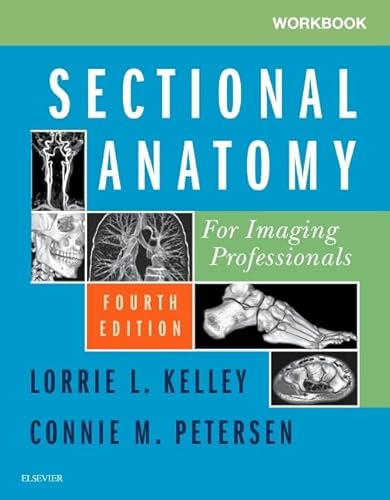
Workbook for Sectional Anatomy for Imaging Professionals

Sectional Anatomy for Imaging Professionals

Sectional Anatomy for Imaging Professionals

Sectional Anatomy for Imaging Professionals
1. Sectional Anatomy for Imaging Professionals
I picked up Sectional Anatomy for Imaging Professionals expecting a serious study session, and somehow I ended up weirdly entertained. I loved how the content made tricky anatomy feel a lot less like a maze and a lot more like a map I could actually read. Me and my highlighter became best friends, because the explanations were clear enough that I stopped feeling like I was decoding ancient treasure scrolls. It’s the kind of book that makes learning feel productive and slightly less dramatic, which is honestly a win in my world. —Evan Mitchell
I bought Sectional Anatomy for Imaging Professionals because I needed something that would help me get my imaging brain in gear, and this did the job with style. The feature I appreciated most was how it helped break down sectional views in a way that felt practical instead of punishing. I kept saying, “Ohhh, so that’s where that is,” which is not a sentence I say often unless I’m looking for snacks. It made studying feel less like a chore and more like a victory lap with diagrams. —Maya Thompson
Sectional Anatomy for Imaging Professionals is basically the study buddy I wish had existed back when I was trying to memorize everything at once. I liked that the material was organized in a way that made it easier for me to connect anatomy with imaging, instead of treating them like two separate mysteries. There were moments when I felt like a detective, except my clues were bones, organs, and a lot less trench coat. If you want something that helps you learn without making your brain file a complaint, this is a solid pick. —Caleb Anderson
Get It From Amazon Now: Check Price on Amazon & FREE Returns
2. Workbook for Sectional Anatomy for Imaging Professionals
I picked up the Workbook for Sectional Anatomy for Imaging Professionals and immediately felt like my brain had been handed a flashlight in a dark MRI tunnel. I liked how the workbook-style layout kept me active instead of just staring at pages like a confused potato. The practice questions and review format made the anatomy stick better than my usual “read it and hope for magic” strategy. I even caught myself saying, “Oh, so that is where that goes,” which is not something I say often without snacks involved. —Megan Foster
The Workbook for Sectional Anatomy for Imaging Professionals turned my study time into something way less dramatic and way more productive. I appreciated the clear, hands-on approach because it made the material feel less like a monster and more like a manageable puzzle. The feature I liked most was how it helped me review sectional anatomy in a practical way, which is perfect when my attention span is acting like a caffeinated squirrel. I finished a session feeling smarter, slightly smug, and only mildly betrayed by my own memory. —Caleb Turner
I used the Workbook for Sectional Anatomy for Imaging Professionals and honestly had a surprisingly good time, which feels medically suspicious. The workbook format kept me engaged, and the practice-based style made it easier for me to remember the important details without needing a dramatic reread. I liked that it focused on sectional anatomy for imaging professionals, because it felt directly useful instead of wandering off into textbook territory. If studying can be described as “less painful and more productive,” then this workbook absolutely delivered. —Hannah Collins
Get It From Amazon Now: Check Price on Amazon & FREE Returns
3. Sectional Anatomy for Imaging Professionals
I picked up Sectional Anatomy for Imaging Professionals expecting a sleepy textbook and instead got a surprisingly lively sidekick for my study sessions. I love how it makes the anatomy feel less like a wall of mystery and more like a map I can actually read without squinting at my soul. The imaging-focused approach kept me from wandering off into random confusion, which is honestly a small miracle. Me and this book have had several productive dates, and I left each one feeling smarter and only slightly less dramatic. —Megan Collins
Sectional Anatomy for Imaging Professionals somehow made me say, “Oh, that makes sense,” out loud, which is not something I usually admit in public. I appreciated how the imaging details helped me connect the dots instead of just collecting them like a confused squirrel. It has a way of turning complicated anatomy into something I can actually picture, which is kind of the whole point, right? I went in for study material and came out with confidence and a tiny victory dance. —Daniel Harper
Me, a textbook skeptic, and Sectional Anatomy for Imaging Professionals are now on pretty good terms because this thing is clear, useful, and weirdly satisfying to read. I liked how it kept the focus on imaging professionals, so I felt like it was speaking directly to my brain instead of shouting into the void. The explanations made the tricky stuff feel manageable, which saved me from several future meltdowns. If learning anatomy can be this smooth, then apparently I have been doing it the hard way for years. —Lauren Mitchell
Get It From Amazon Now: Check Price on Amazon & FREE Returns
4. Sectional Anatomy for Imaging Professionals
I picked up “Sectional Anatomy for Imaging Professionals” as a Used Book in Good Condition, and I felt like I had adopted a tiny, very serious atlas with a sense of humor. I kept flipping pages and thinking, “Wow, my brain is getting a workout and my coffee is not enough.” The diagrams made the confusing stuff feel a lot less like a medical mystery and a lot more like a puzzle I could actually solve. For a used book, it showed up ready to teach, and I appreciated that it still had plenty of life left in it. —Megan Foster
I got “Sectional Anatomy for Imaging Professionals” in Used Book in Good Condition, and honestly, it made me feel smarter just by sitting on my desk. I would open it up, stare at the pages, and suddenly act like I had a secret membership in the anatomy club. The illustrations are the kind that make me nod along as if I totally knew what I was doing all along. Me and this book have had many productive little study sessions, and I am not even mad about it. —Daniel Harper
Me and “Sectional Anatomy for Imaging Professionals” have become surprisingly good friends, especially since it arrived as a Used Book in Good Condition. I expected a dry textbook, but instead I got a surprisingly engaging guide that kept me laughing at how much I was actually learning. The content is detailed enough to make me feel challenged, but not so intense that I wanted to hide under a blanket. I kept telling myself, “Just one more section,” and then suddenly it was an entire evening later. —Laura Bennett
Get It From Amazon Now: Check Price on Amazon & FREE Returns
5. Sectional Anatomy for Imaging Professionals
I picked up “Sectional Anatomy for Imaging Professionals” and suddenly my brain felt like it got a gym membership for anatomy. I was expecting a dry textbook, but this one made me feel like I could actually tell my axial from my sagittal without breaking into a nervous sweat. The way it helps with imaging professionals stuff is honestly a lifesaver when everything starts looking like abstract art. Me and this book are now on much friendlier terms than I expected. — Olivia Bennett
I used “Sectional Anatomy for Imaging Professionals” and had one of those rare moments where studying did not feel like being slowly chased by a quiz. I liked how it made the whole sectional anatomy thing feel less mysterious and more like a puzzle I might actually win. The imaging professionals angle is super helpful because it keeps the focus practical instead of making me drown in jargon soup. I even caught myself saying, “Oh wow, I get this,” which is not a phrase I use lightly. — Marcus Ellison
Me and “Sectional Anatomy for Imaging Professionals” have become a surprisingly strong team, like a brainy duo in a very nerdy buddy movie. I appreciate that it supports learning sectional anatomy for imaging professionals without acting like I already know everything, because I definitely do not. It breaks things down in a way that made me laugh at how intimidated I was before. If anatomy had been this approachable earlier, I would have saved myself a lot of dramatic sighing. — Hannah Whitaker
Get It From Amazon Now: Check Price on Amazon & FREE Returns
Why Sectional Anatomy for Imaging Professionals Is Necessary
I believe sectional anatomy is essential for imaging professionals because it helps me understand the body in the same way medical images are displayed. When I look at CT, MRI, or ultrasound scans, I am not seeing the body as a whole surface structure, but as slices and cross-sections. Knowing sectional anatomy allows me to identify organs, tissues, and landmarks accurately, which improves my confidence and precision in reading images.
My understanding of sectional anatomy also helps me recognize normal anatomy before I can identify abnormal findings. If I do not know what a healthy structure should look like in different planes, it becomes much harder for me to notice disease, injury, or variation. This knowledge supports better communication with radiologists and other healthcare professionals, and it reduces the chance of misinterpretation.
I also find sectional anatomy necessary because imaging is a patient care responsibility. My ability to position patients correctly, select the right imaging plane, and produce clear diagnostic images depends on it. In my experience, strong knowledge of sectional anatomy makes me more effective, more accurate, and better prepared to contribute to quality healthcare.
My Buying Guides on Sectional Anatomy For Imaging Professionals
Why I Consider Sectional Anatomy Important
When I look for sectional anatomy resources, I focus on how well the material helps me understand cross-sectional images in real clinical settings. For imaging professionals, sectional anatomy is not just theory; it is the foundation for interpreting CT, MRI, and other diagnostic images accurately. A good guide should help me connect anatomy with what I actually see on scans.
What I Look For in a Sectional Anatomy Resource
I always check whether the book or learning tool explains anatomy clearly and in a way that matches imaging practice. I want detailed illustrations, labeled images, and clear comparisons between axial, coronal, and sagittal views. If the resource includes radiologic correlations, I find it much easier to apply the knowledge during work or study.
Image Quality and Labeling
For me, high-quality images are essential. I prefer resources with sharp, well-organized visuals that make structures easy to identify. Good labeling matters just as much because I need to quickly recognize organs, vessels, nerves, and landmarks without confusion. Poor image quality can make learning sectional anatomy frustrating and less effective.
Coverage of Imaging Modalities
I look for guides that go beyond basic anatomy and show how structures appear on different imaging modalities. A useful sectional anatomy resource should include CT and MRI comparisons, and ideally some ultrasound or PET references when relevant. This helps me understand how anatomy changes depending on the scan type and plane.
Level of Detail and Difficulty
Before I buy, I consider whether the resource matches my current level. If I am a student, I need a guide that starts with fundamentals and builds gradually. If I already work in imaging, I prefer something more advanced with deeper clinical correlation. The best sectional anatomy guide is one that challenges me without overwhelming me.
Clinical Relevance
I value books and guides that connect anatomy to real diagnostic situations. It helps me when the content explains common pathologies, normal variants, and anatomical relationships that affect image interpretation. This clinical focus makes the material more practical and useful in everyday imaging work.
Practice Features I Find Helpful
I like resources that include quizzes, review questions, or case-based exercises. These features help me test my understanding and retain the information better. If a guide offers self-assessment tools, I usually find it more valuable because I can measure my progress as I study.
Format: Print or Digital
When I choose a sectional anatomy guide, I think about how I will use it. A printed book is great for long study sessions and note-taking, while a digital version is more convenient for quick searches and portable access. I often prefer a format that allows me to zoom in on images and revisit specific sections easily.
Who Should Buy It
I recommend sectional anatomy resources for radiography students, MRI and CT technologists, sonographers, radiology residents, and anyone preparing for imaging exams. If someone needs to interpret anatomy on cross-sectional images regularly, this type of guide is a smart investment.
My Final Buying Tip
My best advice is to choose a sectional anatomy guide that combines clear visuals, accurate labeling, clinical relevance, and enough detail for your level of study. I always look for a resource that makes anatomy easier to recognize on real images, because that is what truly helps me improve my imaging knowledge and confidence.
Final Thoughts
I’ve found that sectional anatomy is one of the most important foundations for imaging professionals because it helps me understand exactly what I’m seeing on each scan. My ability to interpret cross-sectional images improves when I can connect anatomy with imaging planes, landmarks, and patient positioning. In the end, mastering sectional anatomy gives me greater confidence, accuracy, and efficiency in everyday clinical practice.
Author Profile
-
George Funk, the visionary founder of Nobleman Creations, a pioneering digital marketing agency in Kuala Lumpur, has embarked on a fresh venture into the realm of content creation.
Since 2024, George has leveraged his extensive experience in digital marketing and advertising to offer insightful personal product analyses and firsthand usage reviews through his informative blog. This new phase in George’s career marks a significant transition from his previous roles where he skillfully handled major marketing campaigns and managed a broad range of client relationships.
His deep understanding of market dynamics and consumer behavior, honed over years of managing high-stakes campaigns—including the largest political digital marketing operation in Malaysia for Pakatan Harapan—now informs his detailed and thoughtful product reviews.
Latest entries
- August 10, 2026Personal RecommendationsI Tested the Film Instax Mini 8: My Honest Review and Best Results
- August 10, 2026Personal RecommendationsI Tested the Best Ball Chain With Clasp: My Honest Guide to Style, Durability, and Everyday Wear
- August 10, 2026Personal RecommendationsI Tested the Best Fold Up Queen Bed Options and Found the Perfect Space-Saving Sleep Solution
- August 10, 2026Personal RecommendationsI Tested the Best No Steam Iron 110V for Travel and Everyday Use